Yanmar Light Tower vs Kubota and Quanchai Diesel Engines: Power, Service, and Fleet Selection
Selecting a Yanmar light tower instead of a Kubota or Quanchai build on a 9 m (29.5 ft) trailer platform does not change lamp brightness: each water-cooled three-cylinder engine couples to a 9 kW rated generator and powers the same four 400 W LED fixtures delivering 1,600 W total load and 176,000 lm. The real choice hinges on regional spare-parts access, rental fleet brand mandates, and upfront capital budget.
Choose Yanmar or Kubota when local dealer parts availability and rental buyer brand mandates govern uptime, and choose Quanchai when lower acquisition cost and regional service access prioritize capital efficiency. Keeping that boundary clear stops fleet managers from overspending for engine nameplate horsepower that a 1,600 W LED lamp bank uses in part.
How a Kubota Light Tower Compares to Yanmar and Quanchai Configurations
Three-Cylinder Water-Cooled Engine Output vs Lamp Load
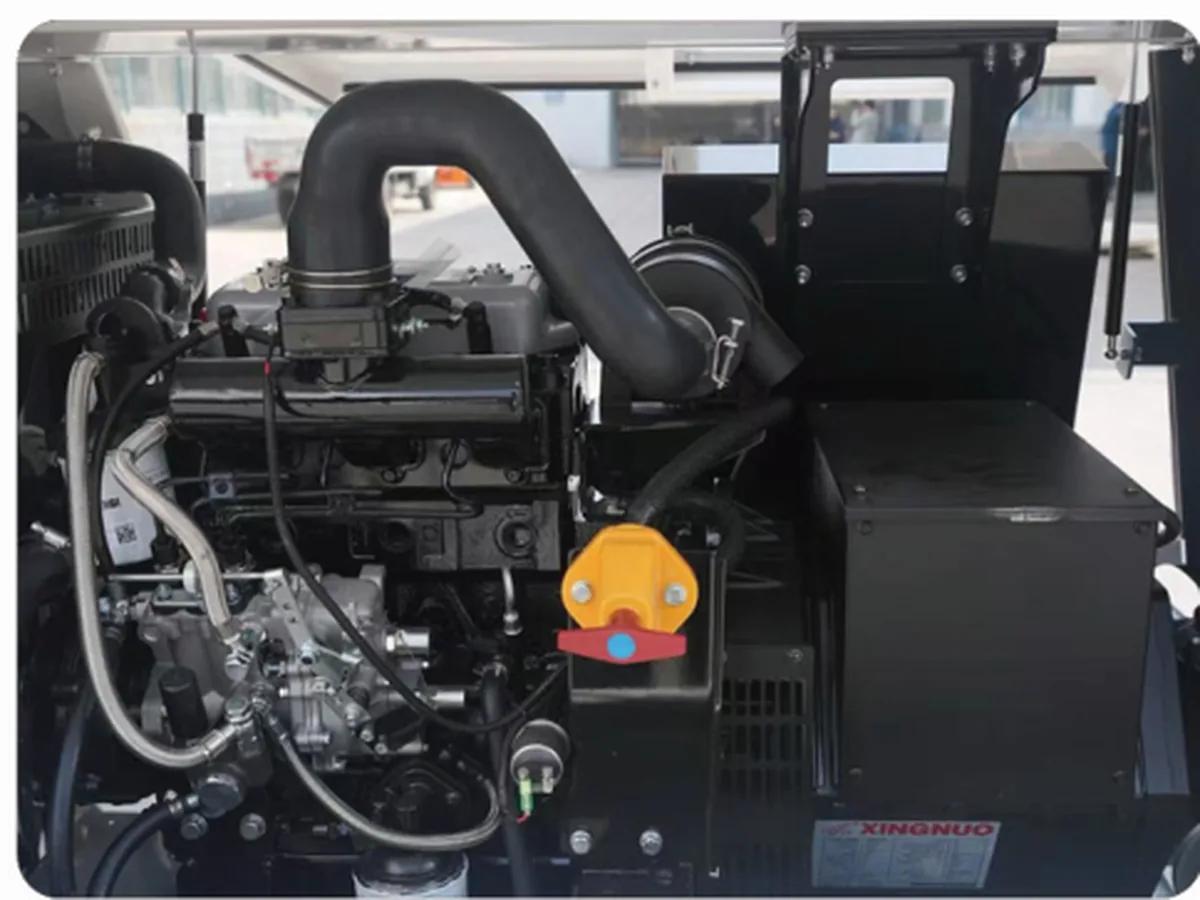
On the 9 m water-cooled SZMT9-1600/4L 095 9 m diesel light tower, buyers can specify three water-cooled, three-cylinder diesel engines: Yanmar at 9 kW, Kubota at 9.5 kW, or Quanchai at 11 kW. A water-cooled three-cylinder diesel engine circulates liquid coolant through a radiator to hold steady operating temperatures across multi-hour overnight shifts, reducing thermal wear compared with smaller air-cooled powerplants.
Because the four 400 W LED lamps draw 1,600 W combined, a Kubota light tower at 9.5 kW, a Yanmar build at 9 kW, and a Quanchai build at 11 kW each carry substantial mechanical power margin above the lighting load. That headroom helps stabilize engine speed during cold starts, high-ambient-temperature work, and generator load spikes. On compact 7 m (23.0 ft) platforms such as the SZMT7-1600/4L 094 7 m diesel light tower, the standard configuration uses a 4.5 kW diesel powerplant, with Kubota and high-temperature packages available as optional builds rather than baseline equipment.
Engine Specification and Platform Comparison
| Platform and Engine Option | Engine Rated Power | Generator Rated Output | Mast Height and Lamp Load | Fuel Tank Capacity | Chassis Weight and Format |
|---|---|---|---|---|---|
| 095 with Yanmar 3-Cylinder | 9 kW (water-cooled) | 9 kW | 9 m (29.5 ft), 4×400W LED (176,000 lm) | 100 L (26.4 gal) | 1,000 kg (2,205 lb) trailer, 4 outriggers |
| 095 with Kubota 3-Cylinder | 9.5 kW (water-cooled) | 9 kW | 9 m (29.5 ft), 4×400W LED (176,000 lm) | 100 L (26.4 gal) | 1,000 kg (2,205 lb) trailer, 4 outriggers |
| 095 with Quanchai 3-Cylinder | 11 kW (water-cooled) | 9 kW | 9 m (29.5 ft), 4×400W LED (176,000 lm) | 100 L (26.4 gal) | 1,000 kg (2,205 lb) trailer, 4 outriggers |
| 094 Standard 7 m Diesel | 4.5 kW (Kubota optional) | Matched 4.5 kW unit | 2.5–7 m (8.2–23.0 ft), 4×400W LED (176,000 lm) | 48 L (12.7 gal) external | Push + tow (7 m upgraded chassis 457 kg / 1,008 lb) |
Clarifying Engine Power vs Generator Output Ratings
Procurement teams comparing supplier quotes often misread engine shaft power as electrical generator output. On the 095 specification sheet, engine power (9 kW, 9.5 kW, or 11 kW) is separated from the 9 kW rated generator output, whereas some 9 m upgraded brochure sheets group 11 kW, 9.5 kW, and 9 kW under generator power. Before signing a purchase order, confirm the engine model nameplate power and the alternator continuous electrical rating as two distinct line items so cross-quote comparisons remain direct and consistent.
Sizing a Diesel Generator Light Tower for Remote and Multi-Shift Sites
Continuous-Duty Cooling and Enclosure Access
Mining benches, oilfield pads, and remote highway bridges punish under-cooled engines with long overnight shifts, airborne dust, and infrequent mechanic visits. On the mining and oilfield lighting application page and the diesel light towers category, water-cooled three-cylinder builds on the 1,000 kg (2,205 lb) trailer chassis are favored for multi-shift endurance.
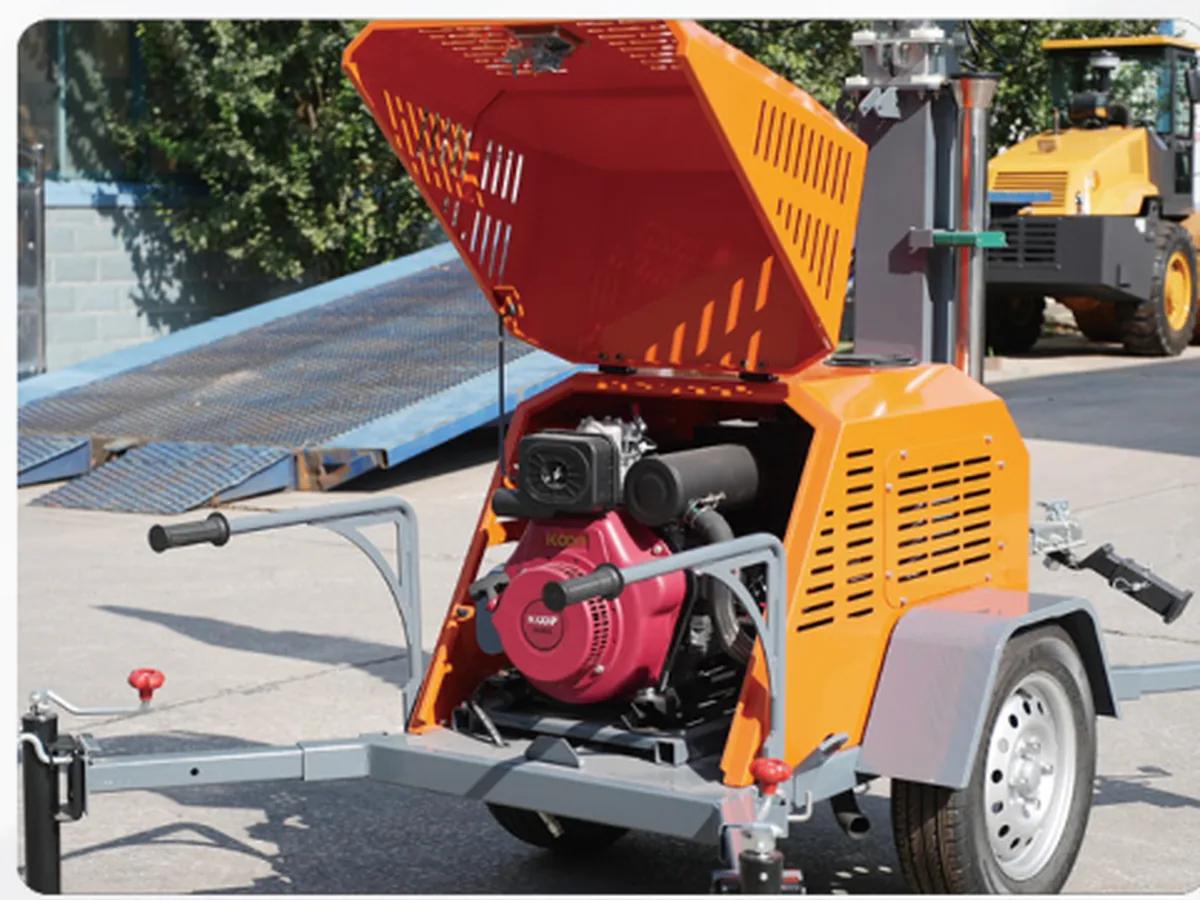
Service access directly affects whether field technicians complete oil and filter changes on schedule. Both the 094 and 095 incorporate wide-opening canopy covers that expose oil dipsticks, fuel filters, coolant reservoirs, and belt drives without dismantling outer body panels.
Fuel Tank Volume and Refueling Cadence
Fuel autonomy shapes total operating cost on distant jobsites. The 100 L (26.4 gal) tank on the 095 doubles the 48 L (12.7 gal) external tank on the 094, stretching the interval between fuel-truck visits. The 9 m (29.5 ft) feature sheet cites a nominal 36-hour runtime on the 100 L (26.4 gal) tank, while individual engine rows show 38, 40, and 40 with load conditions and units confirmed at quotation. Confirm measured hourly fuel burn at full 1,600 W LED load for the chosen engine before finalizing site fuel logistics, and review the diesel vs solar vs hybrid lighting tower price guide to compare fuel-driven operating costs against solar-hybrid upfront capital.
Using a Light Plant Generator Beyond Floodlighting
Auxiliary Power Headroom Above 1,600 W LED Load
Contractors frequently search for a light plant generator because they want one towable machine to illuminate a work zone and run small handheld tools, battery chargers, or portable pumps. On a 095 build with a 9 kW rated generator feeding 1,600 W of LED lamps, theoretical electrical headroom exceeds 7 kW.
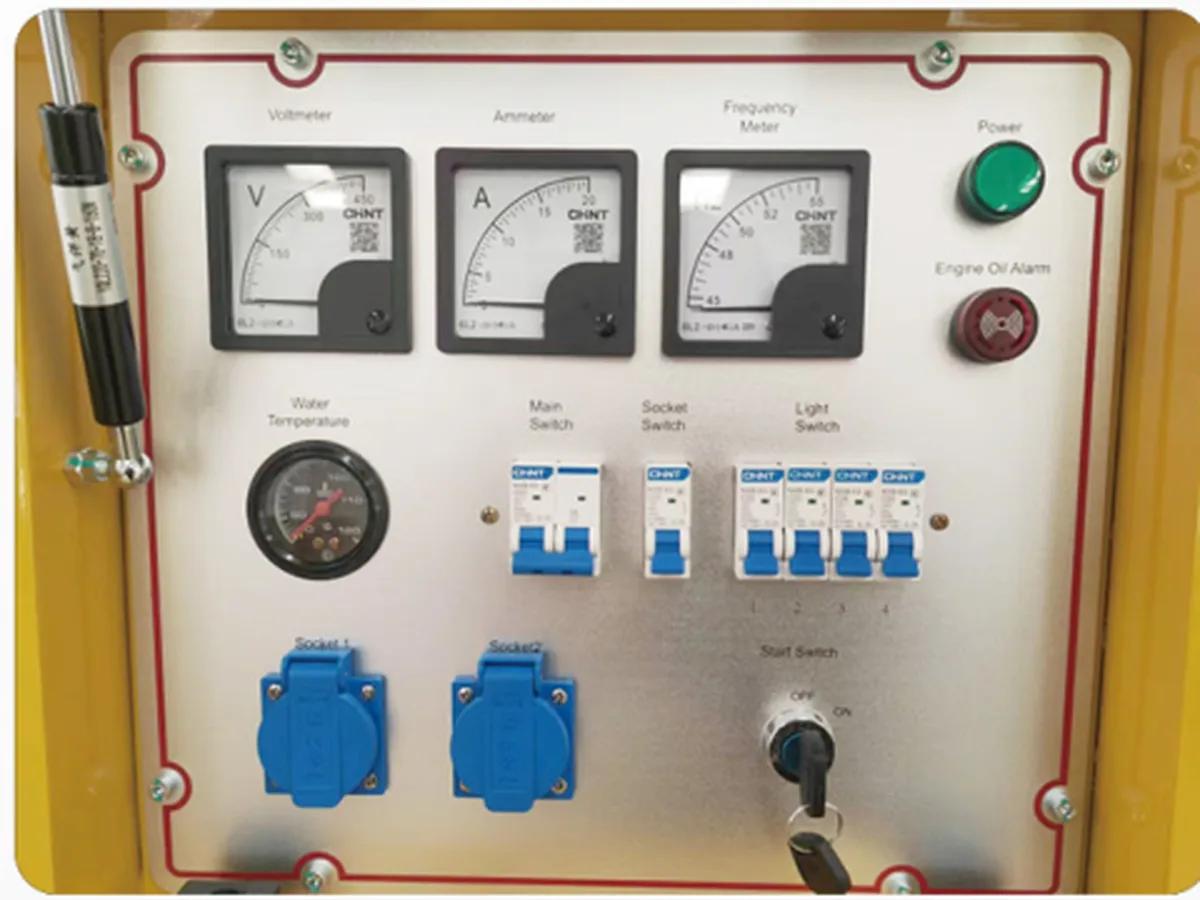
Turning theoretical headroom into usable jobsite power requires clear order specifications. Confirm the exact auxiliary receptacle layout, output voltage, electrical frequency (50 Hz or 60 Hz), and circuit breaker capacity on the control panel before assuming the unit can power external jobsite equipment alongside the four LED fixtures.
Generator Ingress Protection Limits and Weather Readiness
Some generator specifications cite IP23 protection. Ingress Protection (IP) is a two-digit rating where the first digit indicates solid-object protection and the second indicates moisture protection; IP23 denotes protection against solid objects larger than 12.5 mm (0.49 in) and water spray tilted up to 60 degrees from vertical. That IP23 rating applies to the generator component itself and does not represent full-machine waterproofing for the trailer chassis, electrical panel, or lamp housings. For coastal, tropical, or heavy-rain deployments, confirm enclosure sealing details and drainage paths with the factory rather than relying on a generator-component IP23 figure.
Parts Availability, Climate Packages, and Fleet Maintenance Planning
Matching Engine Brands to Regional Service Networks
Engine selection becomes primarily a logistics decision once routine oil, fuel, and air filter service intervals begin. Fleet operators in North America, Europe, Australia, or international mining corridors often specify Yanmar or Kubota because local equipment dealers stock consumables and rental clients recognize those names on tender sheets. Operators in regions with strong Chinese industrial diesel support, or cost-sensitive contractor fleets prioritizing lower initial outlay, often select the 11 kW Quanchai build while holding spare filter kits on site.
Because uniform independent noise (dBA) or hourly fuel-consumption tests across the three engines require factory verification, request measured test sheets for the exact engine configuration if site contracts mandate specific noise or fuel thresholds.
High-Temperature Builds and Mast Pairing Considerations
Hot desert and tropical civil projects require careful thermal planning. The 094 platform offers a dedicated high-temperature configuration alongside an optional Kubota engine for buyers who need compact 7 m (23.0 ft) mobility in elevated ambient heat. When pairing engine-trailer weight with mast elevation and towing clearance, see the 7 m vs 9 m telescopic light tower mast selection guide to verify chassis footprint and wind resistance ratings.
FAQS
Does the 11 kW Quanchai engine make the 095 light tower brighter than the 9 kW Yanmar or 9.5 kW Kubota build?
No. Each of the three engine options on the SZMT9-1600/4L (095) drives a 9 kW rated generator feeding the same four 400 W LED heads (1,600 W total, 176,000 lm). Higher engine shaft power provides mechanical reserve rather than additional lumen output.
Can a 7 m (23.0 ft) 094 light tower be ordered with a Kubota engine?
Yes. While the standard SZMT7-1600/4L (094) uses a 4.5 kW diesel powerplant, the manufacturer brochure shows Kubota and high-temperature builds as optional configurations. Specify the exact engine option on the quotation request because optional builds do not share identical specifications with the base unit.
Is a 9 kW generator light tower able to run power tools at the same time as the LED lamps?
With 1,600 W drawn by the four 400 W LED fixtures, a 9 kW rated generator leaves significant capacity on paper. Confirm auxiliary outlet sockets, breaker ratings, voltage, and 50 Hz or 60 Hz frequency with the factory before planning external tool loads.
Does an IP23 rating mean the entire diesel light tower is waterproof?
No. IP23 protects against solid objects larger than 12.5 mm (0.49 in) and water spray up to 60 degrees from vertical, and appears on generator specifications rather than whole-machine certification. Verify canopy weatherproofing and control-panel protection for heavy-rain environments.
How long does the 100 L (26.4 gal) fuel tank run on Yanmar, Kubota, and Quanchai builds?
The 9 m (29.5 ft) feature sheet cites a nominal 36-hour runtime, while engine table rows display 38, 40, and 40 without stated test load or units. Confirm the exact load condition and measured liters-per-hour fuel burn for your selected engine before finalizing refueling intervals.
What regional emissions or safety documents should buyers confirm before importing a diesel light tower?
Destination markets enforce distinct engine emissions and electrical safety rules. Confirm required engine emissions tier, electrical compliance documents, and road-towing lighting specifications with Qingdao Awesome Technology Ltd prior to production rather than assuming certifications are included as standard.